
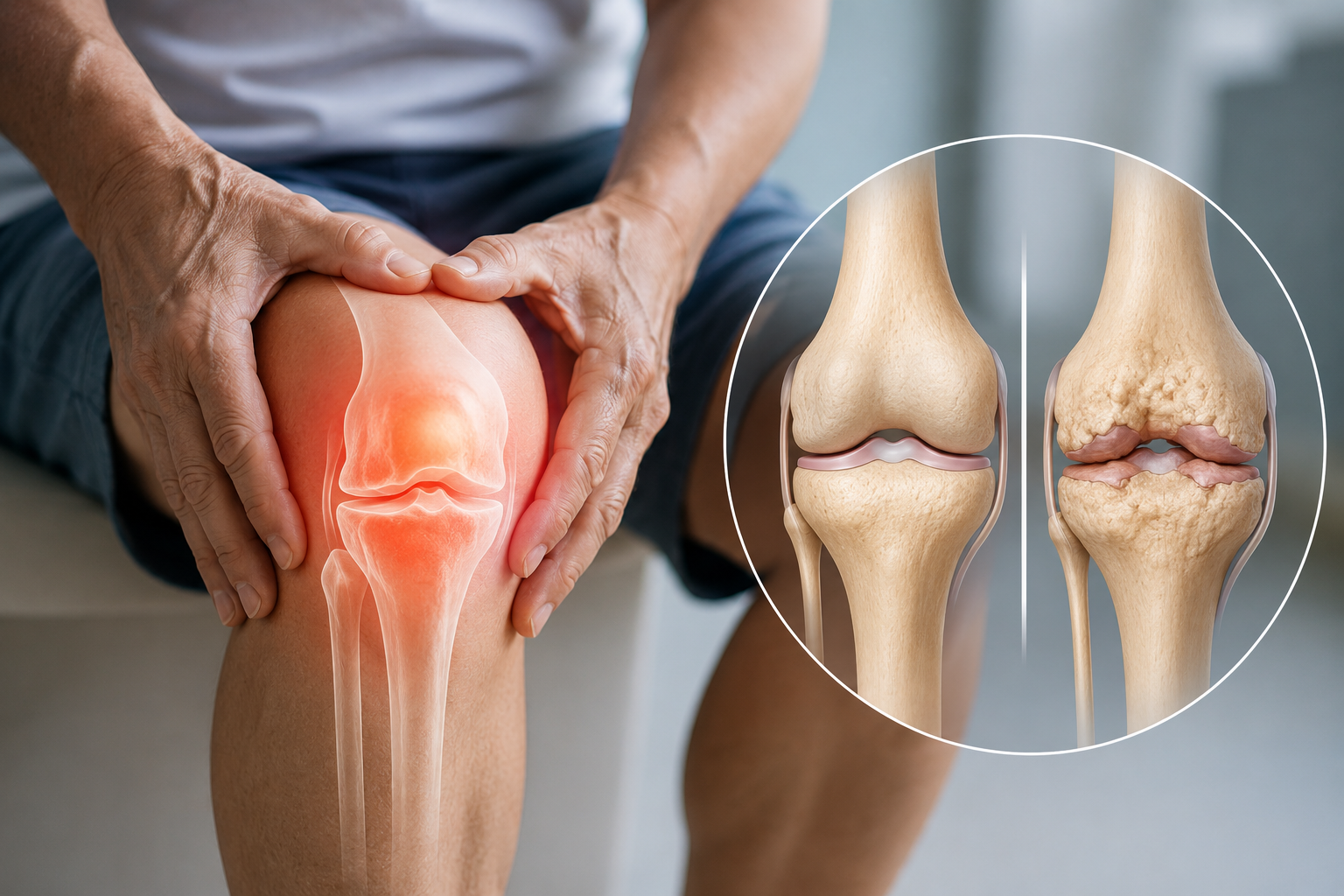
Knee pain can start quietly. You may notice stiffness when getting out of bed, discomfort while climbing stairs, or pain after walking for a long time. It is easy to dismiss these symptoms as normal ageing or overuse.
But when knee pain becomes persistent, affects everyday activities, or keeps returning, osteoarthritis of the knee could be one possible cause.
Understanding the symptoms early can help you seek appropriate medical evaluation and explore the right knee arthritis treatment before the condition significantly interferes with your mobility and quality of life.
What Is Osteoarthritis of the Knee?
Knee osteoarthritis is a degenerative joint condition in which the structures that normally allow the knee to move smoothly gradually undergo changes.
The knee contains cartilage that helps cushion the ends of the bones and allows relatively smooth movement. With osteoarthritis, this cushioning can deteriorate over time. Changes can also occur in the surrounding bone and joint tissues.
In simple terms, knee osteoarthritis is a condition that can cause pain, stiffness and reduced movement as the knee joint changes over time.
It is more common with increasing age, but ageing is not the only factor involved.
Symptoms of Knee Osteoarthritis
Symptoms can develop gradually and may vary considerably from person to person.
Common knee osteoarthritis symptoms include:
1. Knee Pain
Pain is one of the most noticeable symptoms. It may initially occur during activities such as walking, climbing stairs, squatting or standing for extended periods.
As osteoarthritis progresses, discomfort may become more frequent and may interfere with routine activities.
2. Stiffness
You may experience stiffness after sitting for a long time or when getting up in the morning.
Some people describe the knee as feeling difficult to “loosen up” after remaining inactive.
3. Swelling
The knee may occasionally become swollen or feel puffy. Swelling can occur because of inflammation or other changes within the joint.
4. Reduced Range of Motion
Osteoarthritis can make it increasingly difficult to bend or straighten the knee fully.
This may affect activities such as sitting on the floor, squatting, using stairs or getting into and out of a vehicle.
5. Grinding or Clicking Sensation
Some people experience a grating, grinding or clicking sensation when moving the knee.
These sounds alone do not necessarily mean that severe arthritis is present. However, when they occur along with pain, stiffness or reduced movement, they should be discussed with a healthcare professional.
6. Difficulty With Everyday Activities
One of the most important signs is not simply the presence of pain, but what the pain prevents you from doing.
For example, you may find yourself:
- Avoiding stairs
- Walking shorter distances
- Using support while getting up
- Avoiding exercise
- Changing the way you walk
- Stopping activities you previously enjoyed
These changes can indicate that knee symptoms are beginning to affect your quality of life.
What Causes Knee Osteoarthritis?
There is rarely one single reason why someone develops osteoarthritis.
Several factors can contribute to changes in the knee joint.
Age
The likelihood of osteoarthritis generally increases with age because joints undergo cumulative changes over time.
Previous Knee Injury
A previous injury involving the knee can increase the risk of developing osteoarthritis later.
This is one reason why persistent knee symptoms following an old injury should not simply be ignored.
Repetitive Joint Stress
Activities or occupations that repeatedly place substantial stress on the knees may contribute to joint problems in some individuals.
Excess Body Weight
Additional body weight can increase the mechanical load placed on the knee during everyday movement. Weight management may therefore form an important part of an overall treatment strategy when appropriate.
Joint Alignment and Other Factors
The way forces are distributed through the knee can influence how different parts of the joint are loaded. Genetics and individual joint characteristics may also play a role.
How Is Knee Osteoarthritis Diagnosed?
Knee pain does not automatically mean osteoarthritis.
A doctor typically considers several factors, including:
- Your symptoms
- How long you have experienced them
- Previous injuries or surgeries
- Physical examination findings
- Knee movement and stability
- Imaging findings when required
An X-ray may be used to assess structural changes in the knee. In selected situations, additional investigations may be considered depending on the symptoms and suspected diagnosis.
The important point is that treatment should be based on an appropriate clinical assessment rather than knee pain alone.
How Is Knee Osteoarthritis Treated?
So, how is knee osteoarthritis treated?
There is no single treatment that is appropriate for everyone. Treatment depends on factors such as symptom severity, functional limitations, overall health, age, activity level and the extent of joint changes.
Lifestyle and Activity Modification
For some people, modifying activities that aggravate symptoms can help reduce discomfort.
This does not necessarily mean stopping all physical activity. In fact, appropriate movement and exercise can be an important component of managing osteoarthritis.
A healthcare professional can help determine which activities are suitable for your individual condition.
Exercise and Physiotherapy
A structured exercise programme may help improve muscle strength, joint movement and physical function.
Strengthening the muscles around the knee can be particularly useful because stronger supporting muscles can help with everyday movement and stability.
The exercises should be appropriate for your condition rather than copied from a generic online routine.
Weight Management
If excess weight is contributing to stress on the knee, gradual and sustainable weight management may be recommended as part of knee arthritis treatment.
It is usually more helpful to focus on realistic, long-term changes rather than short-term diets.
Medicines and Other Non-Surgical Options
Depending on the individual situation, a doctor may recommend medication or other non-surgical approaches to manage pain and improve function.
The choice should consider factors such as other medical conditions, existing medications and potential side effects.
Self-medicating regularly for chronic knee pain is not a substitute for proper evaluation.
When Is Knee Replacement Considered?
Knee replacement may be considered when osteoarthritis has become advanced and symptoms are significantly affecting daily life, particularly when appropriate non-surgical treatments have not provided sufficient relief.
The decision is not based solely on an X-ray.
A person with considerable changes on an X-ray may have manageable symptoms, while another person with symptoms that substantially limit walking and everyday activities may require a different treatment discussion.
The objective is to select treatment based on the person, symptoms and functional limitations—not an image alone.
Why Early Evaluation Matters
Many people wait until knee pain becomes severe before consulting a specialist.
That can make it harder to maintain normal activity levels and may lead to gradual changes in how you move.
If you have persistent knee pain, recurrent swelling, stiffness or difficulty performing everyday activities, getting the knee assessed can help clarify what is causing the symptoms and what options are appropriate.
If you are specifically looking for osteoarthritis treatment Mumbai, choose a qualified orthopaedic specialist who can evaluate your symptoms and discuss treatment according to your individual condition.
Practical Tips for Managing Knee Arthritis
If you have been experiencing knee symptoms, consider these practical steps:
- Do not ignore persistent or worsening knee pain.
- Avoid repeatedly pushing through activities that clearly aggravate your symptoms.
- Maintain appropriate physical activity rather than becoming completely inactive.
- Work on maintaining a healthy body weight if recommended for you.
- Follow a structured exercise or physiotherapy programme when advised.
- Take medicines only as recommended by your healthcare professional.
- Keep track of activities that increase or reduce your symptoms.
- Seek medical evaluation if pain begins interfering with normal daily activities.
Most importantly, remember that knee pain is a symptom, not a diagnosis. Identifying the underlying cause is the first step towards choosing an appropriate treatment.
Frequently Asked Questions About Knee Osteoarthritis
What is the most common symptom of knee osteoarthritis?
Knee pain is one of the most common symptoms. It may initially appear during activities such as walking, climbing stairs or standing for prolonged periods. Stiffness and reduced movement can also occur.
Can knee osteoarthritis be cured?
Osteoarthritis involves structural changes in the joint and is generally considered a long-term condition. However, symptoms and physical function can often be managed through an appropriate combination of lifestyle measures, exercise, medication and, when necessary, surgical treatment.
What is the best treatment for knee arthritis?
There is no single “best” treatment for everyone. Knee arthritis treatment depends on the severity of symptoms, functional limitations, individual health factors and response to previous treatments.
Can exercise help knee osteoarthritis?
Appropriately selected exercise can help improve muscle strength, mobility and physical function. However, the type and intensity of exercise should be suitable for the individual’s condition.
When should I see a doctor for knee pain?
Consider medical evaluation if knee pain persists, repeatedly returns, causes swelling or stiffness, limits walking or stairs, or interferes with everyday activities.
Does everyone with knee osteoarthritis need knee replacement?
No. Knee replacement is not automatically required when osteoarthritis is diagnosed. Many people are initially managed with non-surgical approaches. Surgery may be considered when symptoms become severe and significantly affect quality of life despite appropriate conservative treatment.
Take the Next Step for Persistent Knee Pain
Living with recurring knee pain does not mean you have to simply accept it as a normal part of getting older.
If stiffness, pain or reduced mobility is affecting your everyday life, a proper orthopaedic assessment can help determine whether osteoarthritis is involved and which treatment options may be appropriate.
For individuals exploring osteoarthritis treatment Mumbai or knee arthritis treatment, the goal should not simply be to reduce pain temporarily—it should be to understand the condition, preserve mobility where possible and choose treatment based on your individual needs.