
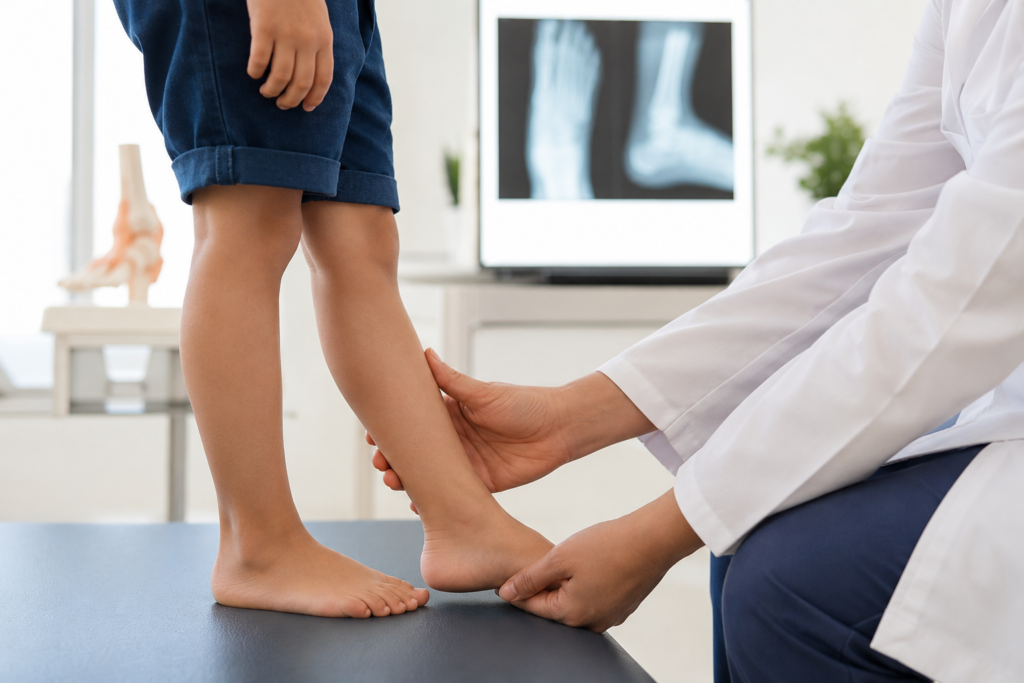
Every parent notices the little things about their child’s growth. The way they walk, run, jump, or even the way their shoes wear out over time can raise questions. Some children walk with their feet turned inward. Others appear flat footed or seem clumsy during sports and play. While many gait differences are completely normal during development, some may point toward conditions that deserve medical attention.
Understanding the difference between normal growth patterns and signs of an underlying orthopedic issue can help parents make informed decisions early. Timely evaluation can prevent discomfort, improve mobility, and support healthy bone development throughout childhood. If your child frequently trips, complains of leg pain, avoids physical activity, or shows uneven walking patterns, it may be time to consult a pediatric orthopedic surgeon in Mumbai for a detailed assessment.
What Is a Child’s Gait?
A gait simply refers to the way a person walks. In children, gait changes constantly as muscles strengthen, coordination improves, and bones grow.
Many walking variations are considered part of normal development, including:
- Flat feet in toddlers
- In toeing while learning to walk
- Bow legs in early childhood
- Slight knock knees between ages 3 and 5
Most of these improve naturally with age. However, persistent symptoms, pain, limping, or worsening deformities should never be ignored.
Understanding Pediatric Flat Feet
Flat feet occur when the arch of the foot does not develop fully, causing the entire sole to touch the ground while standing.
Flexible Flat Feet vs Rigid Flat Feet
Flexible Flat Feet
This is the most common type seen in children. The arch appears when the child sits or stands on tiptoes. Usually, it is painless and improves over time.
Rigid Flat Feet
In this condition, the foot remains stiff with little or no arch even when not bearing weight. It may cause pain, difficulty walking, or restricted movement and often requires medical evaluation. A child bone specialist in Mumbai can determine whether your child’s flat feet are part of normal growth or linked to an orthopedic condition requiring treatment.
When Should Parents Worry About Flat Feet?
You should consider an orthopedic evaluation if your child has:
- Persistent foot or ankle pain
- Difficulty participating in sports
- Frequent tripping or balance issues
- Uneven shoe wear
- Limping
- Stiffness in the feet
- Swelling or fatigue after walking
Children who avoid running or complain of leg tiredness may not simply be “lazy.” Sometimes, the underlying issue is mechanical strain caused by poor foot alignment.
What Is In Toe-ing?
Toeing happens when a child walks with the feet turned inward instead of straight ahead. Parents often describe it as “pigeon toes.” This condition commonly develops due to:
Metatarsus Adductus
A curved foot shape seen in infants.
Internal Tibial Torsion
The shin bone rotates inward, often noticeable during toddler years.
Femoral Anteversion
The thigh bone rotates inward, usually becoming obvious between ages 4 and 6. Most children outgrow in toeing naturally. However, persistent or severe cases may affect walking confidence, posture, and physical activity.
Signs That In Toe-ing Needs Medical Attention
Seek evaluation if your child:
- Trips excessively
- Has one leg turning in more than the other
- Complains of hip, knee, or ankle pain
- Develops worsening walking patterns over time
- Struggles during sports activities
- Shows stiffness or reduced movement
An experienced pediatric orthopedic surgeon in Mumbai can assess bone alignment, muscle balance, and growth patterns to determine whether observation or intervention is needed.
How Growth Plates Affect a Child’s Walking Pattern
Children’s bones contain growth plates, which are soft developing areas near the ends of bones. These plates help bones grow longer during childhood and adolescence. Because growth plates are softer than mature bone, they are more vulnerable to injury, inflammation, and stress related conditions.
In some situations, untreated alignment issues or repetitive strain can affect normal growth and joint function. This is why early diagnosis matters.
Understanding Orthopedic Surgery for Children’s Growth Plates
Most growth plate issues do not require surgery. However, severe deformities, fractures, or growth disturbances sometimes need specialized treatment. Orthopedic surgery for children’s growth plates focuses on protecting future bone development while correcting structural problems safely. Pediatric orthopedic specialists use child specific techniques designed to preserve growth and joint function.
Modern treatment approaches are highly precise and aim to support long term mobility with minimal disruption to natural growth.
Knee Pain in Active Children: Could It Be Osgood Schlatter Disease?
Not every walking complaint starts in the feet. Some children develop gait changes because of knee pain.
One common condition seen in growing athletes is Osgood-Schlatter disease treatment related knee pain. It occurs when repetitive stress irritates the growth plate just below the kneecap.
Children involved in football, basketball, running, or jumping sports often experience:
- Pain below the knee
- Swelling near the shinbone
- Discomfort during activity
- Limping after sports
Early management typically includes activity modification, stretching, strengthening exercises, and guided rehabilitation.
A child bone specialist in Mumbai can help distinguish sports related growth pain from more serious orthopedic concerns.
How Pediatric Orthopedic Specialists Diagnose Gait Problems
A detailed gait assessment usually includes:
Medical History
Doctors evaluate developmental milestones, pain patterns, injury history, and family history.
Physical Examination
This includes checking:
- Foot structure
- Joint flexibility
- Muscle strength
- Hip alignment
- Leg length differences
- Walking mechanics
Imaging Studies
X rays or advanced imaging may be recommended in selected cases to evaluate bone structure and growth plates.
The goal is not simply to label a walking pattern as abnormal, but to understand whether it affects comfort, development, or future mobility.
Treatment Options for Pediatric Gait Problems
Treatment depends entirely on the underlying cause.
Observation
Many developmental gait variations improve naturally without intervention.
Physical Therapy
Stretching, strengthening, and balance exercises can improve coordination and posture.
Footwear Modifications
Supportive shoes or orthotics may help selected children with pain or instability.
Activity Guidance
Children with sports related strain may benefit from temporary activity adjustments.
Surgical Treatment
Rarely, structural deformities or growth related conditions require surgical correction. The key is individualized care rather than unnecessary treatment.
Why Early Evaluation Matters
Many parents wait too long because they assume children will “grow out of it.” While that is true for some conditions, others become harder to correct if ignored for years.
Early assessment can:
- Prevent worsening deformities
- Reduce pain during growth years
- Improve sports participation
- Support healthy posture and balance
- Protect developing joints and growth plates
Children are highly adaptable, which means they may not always complain even when discomfort exists. Observing walking patterns carefully during growth years can make a meaningful difference.
Takeaway
Flat feet and in toeing are often harmless parts of childhood development, but persistent pain, limping, imbalance, or activity limitations should not be dismissed. Understanding when a gait pattern needs attention helps parents take the right steps at the right time.
If your child shows ongoing walking concerns, consulting a qualified pediatric orthopedic surgeon in Mumbai or an experienced child bone specialist in Mumbai can provide clarity, reassurance, and the right treatment approach for healthy long term growth.