
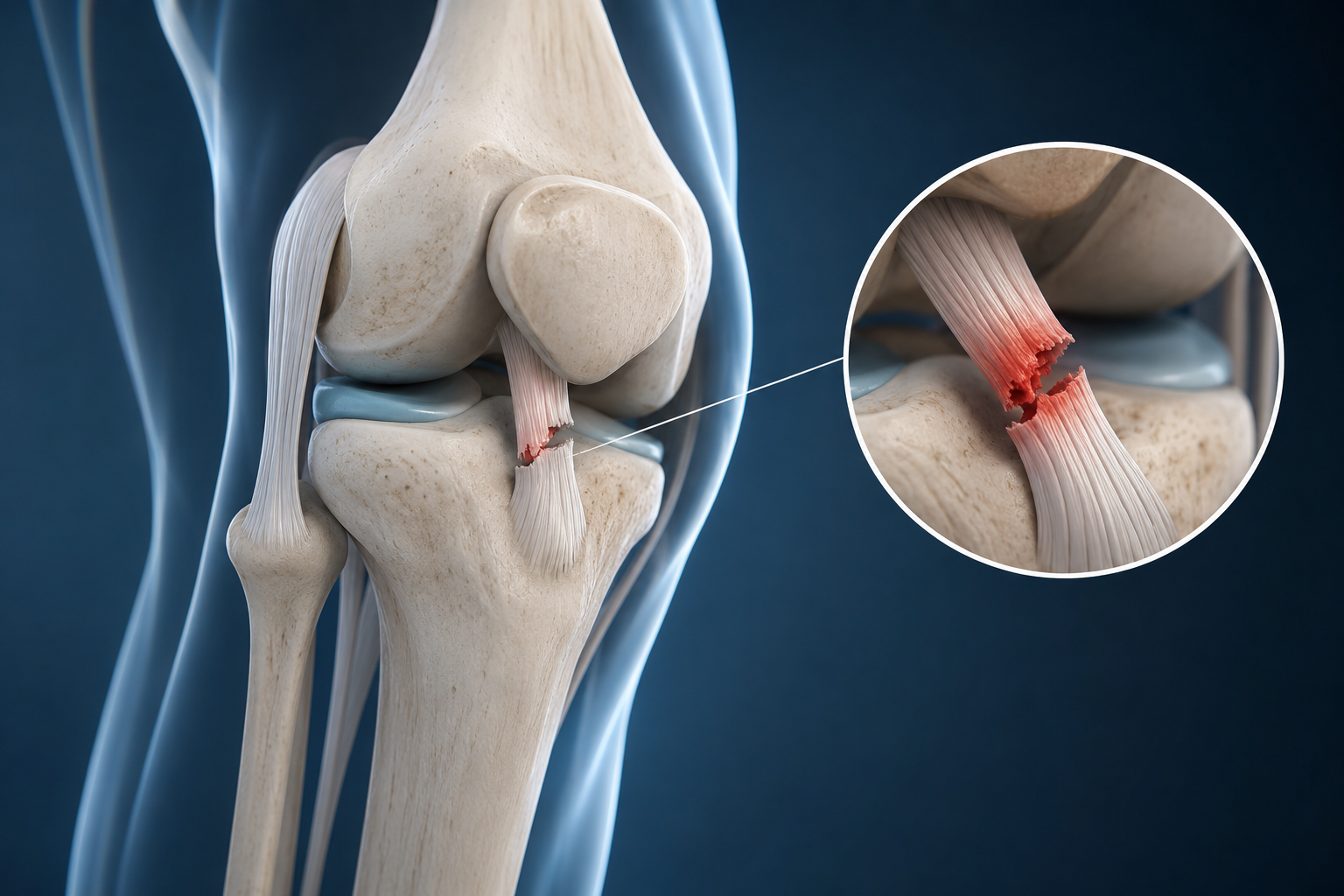
An ACL injury is one of the most common and serious sports knee injuries. The most common symptoms include a sudden popping sound, severe knee pain, swelling within a few hours, instability while walking, and difficulty bearing weight. Treatment depends on the severity of the injury and ranges from rest, physiotherapy, and bracing to ACL reconstruction surgery for complete tears or highly active individuals. Early diagnosis and appropriate treatment help restore knee stability and reduce the risk of long term joint damage.
Whether you are an athlete, a fitness enthusiast, or someone who suffered a sudden twist while walking, recognizing the signs of an ACL injury early can make a significant difference in your recovery.
What Is an ACL Injury?
The Anterior Cruciate Ligament, commonly known as the ACL, is one of the four major ligaments that stabilize the knee joint. It connects the thigh bone to the shin bone and prevents excessive forward movement and rotation of the knee.
An ACL injury occurs when this ligament is stretched beyond its limit or tears completely. It is among the most common forms of knee ligament injury, especially in sports that involve sudden changes in direction, jumping, or awkward landings.
Common Causes of an ACL Injury
An ACL tear does not always result from direct impact. Many injuries occur without any contact.
Common causes include:
- Sudden twisting of the knee
- Pivoting while the foot remains planted
- Landing incorrectly after a jump
- Sudden stopping while running
- Direct collision during sports
- Road traffic accidents
Sports commonly associated with ACL injury include:
- Football
- Cricket
- Basketball
- Tennis
- Badminton
- Volleyball
- Skiing
ACL Tear Symptoms You Should Never Ignore
Recognizing ACL tear symptoms early helps prevent additional damage to the knee.
|
Symptom |
What You May Experience |
|
Popping sensation |
A loud pop at the time of injury |
|
Immediate pain |
Sharp pain making movement difficult |
|
Rapid swelling |
Swelling develops within a few hours |
|
Knee instability |
Feeling that the knee gives way |
|
Limited movement |
Difficulty bending or straightening the knee |
|
Difficulty walking |
Pain while standing or climbing stairs |
Additional warning signs
- Recurrent knee buckling
- Difficulty changing direction
- Pain during sports activities
- Reduced confidence while walking
How Is an ACL Injury Diagnosed?
An orthopedic specialist evaluates your symptoms through a combination of physical examination and imaging studies.
Diagnosis may include:
- Medical history
- Knee stability tests
- X rays to rule out fractures
- MRI scan to confirm ligament damage
- Evaluation of associated cartilage or meniscus injuries
Early diagnosis helps determine whether surgery or conservative treatment is more appropriate.
Types of Knee Ligament Injury
Not every ligament injury requires surgery.
|
Grade |
Severity |
Treatment |
|
Grade I |
Mild stretch |
Rest, physiotherapy |
|
Grade II |
Partial tear |
Brace and rehabilitation |
|
Grade III |
Complete tear |
Often requires ACL reconstruction surgery |
ACL Injury Treatment Options
The right ACL injury treatment depends on several factors including age, activity level, severity of injury, and lifestyle goals.
Non Surgical Treatment
For partial tears or patients with lower activity levels, treatment may include:
- Rest
- Ice application
- Compression
- Elevation
- Knee brace
- Pain management
- Structured physiotherapy
- Muscle strengthening exercises
This approach aims to restore stability while improving knee function.
ACL Reconstruction Surgery
Complete ACL tears or unstable knees often require ACL reconstruction surgery.
Instead of repairing the torn ligament, surgeons reconstruct it using a tendon graft obtained from:
- Hamstring tendon
- Patellar tendon
- Quadriceps tendon
- Donor tissue in selected cases
Modern minimally invasive arthroscopic techniques offer:
- Smaller incisions
- Less pain
- Faster rehabilitation
- Improved knee stability
- Earlier return to sports
Rehabilitation After Surgery
Surgery alone does not guarantee recovery.
Rehabilitation is equally important.
Typical rehabilitation includes:
Phase One
- Swelling reduction
- Pain control
- Gentle range of motion exercises
Phase Two
- Strengthening quadriceps
- Improving flexibility
- Balance training
Phase Three
- Functional exercises
- Running progression
- Sport specific drills
A structured rehabilitation program significantly improves long term outcomes.
ACL Recovery Time
Recovery varies depending on injury severity and treatment.
|
Recovery Stage |
Approximate Timeline |
|
Walking without support |
2 to 6 weeks |
|
Daily routine activities |
6 to 12 weeks |
|
Light jogging |
Around 3 months |
|
Sports specific training |
6 months |
|
Competitive sports |
9 to 12 months |
Returning to sports too early increases the risk of reinjury.
What Happens If an ACL Tear Is Left Untreated?
Ignoring a significant ligament tear knee injury may lead to:
- Chronic knee instability
- Repeated falls
- Meniscus tears
- Cartilage damage
- Early osteoarthritis
- Reduced athletic performance
Prompt medical evaluation can prevent long term complications.
Tips to Prevent an ACL Injury
Although not every injury is preventable, the risk can be reduced.
Prevention strategies
- Warm up before exercise
- Improve leg strength
- Practice balance training
- Learn proper jumping techniques
- Wear appropriate footwear
- Avoid sudden overtraining
- Follow sports specific conditioning programs
Athletes who perform neuromuscular training have been shown to reduce ACL injury risk significantly.
When Should You See an Orthopedic Sports Injury Specialist?
Seek immediate evaluation if you experience:
- A popping sound during injury
- Rapid knee swelling
- Difficulty walking
- Knee instability
- Persistent pain lasting more than a few days
- Recurrent episodes of the knee giving way
An experienced orthopedic sports injury specialist can accurately diagnose the injury and recommend the most suitable treatment plan.
ACL Injury at a Glance
|
Question |
Answer |
|
Can an ACL heal naturally? |
Complete tears generally do not heal on their own. |
|
Is surgery always necessary? |
No. Partial tears may respond well to rehabilitation. |
|
How long is recovery? |
Usually between 6 and 12 months for return to sports. |
|
Can you walk with an ACL tear? |
Yes, but the knee often feels unstable. |
|
What is the biggest risk of delaying treatment? |
Permanent instability and damage to other knee structures. |
Frequently Asked Questions
What are the first signs of an ACL injury?
The earliest signs include a popping sensation, immediate pain, swelling, and difficulty standing or walking.
How do I know if I have an ACL tear or just a sprain?
An MRI combined with a physical examination is the most reliable way to distinguish an ACL tear from a minor sprain.
Is ACL reconstruction surgery painful?
Most patients experience manageable discomfort after surgery, which improves with medication and physiotherapy.
Can I return to sports after an ACL injury?
Yes. Many athletes return to their previous level after completing surgery and a structured rehabilitation program.
How long does ACL recovery take?
Most individuals return to regular daily activities within a few months, while competitive sports typically require 9 to 12 months of rehabilitation.
Conclusion
An ACL injury is a serious knee ligament injury that should never be ignored. Early recognition of ACL tear symptoms, accurate diagnosis, and appropriate ACL injury treatment play a vital role in restoring knee stability and preventing future complications. Whether treatment involves rehabilitation or ACL reconstruction surgery, following a personalized recovery plan greatly improves long term outcomes and helps you safely return to your normal activities.
If you experience sudden knee pain, swelling, or instability after a twist or fall, consult an orthopedic sports injury specialist promptly for a comprehensive evaluation and the most appropriate treatment plan.